
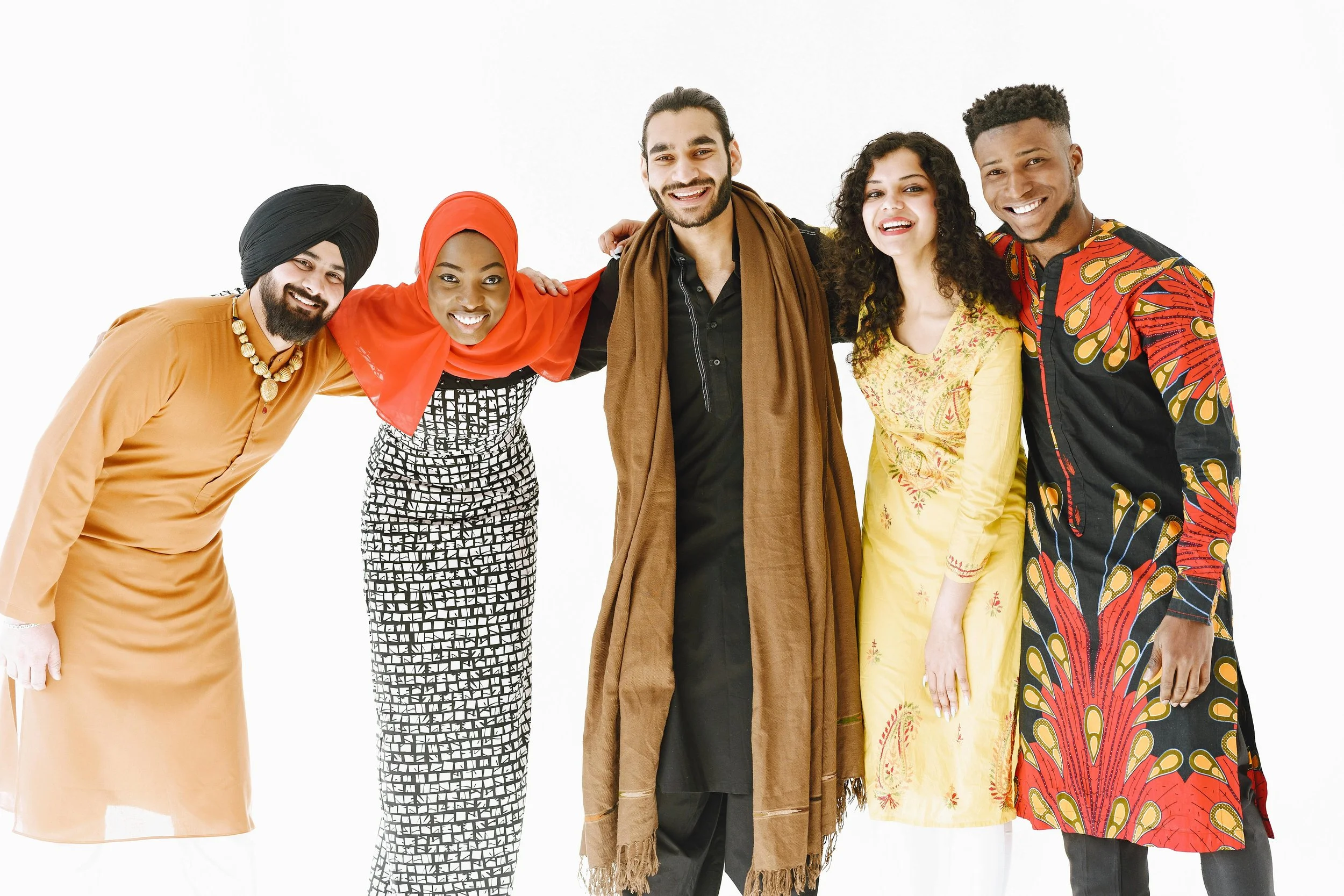
Are Coaching Competencies Truly Universal?
On the final day of a recent coach training programme, I was assessing participants against the competencies defined by the European Mentoring and Coaching Council (EMCC) and the International Coaching Federation (ICF) coaching competencies on the final day of a foundation skills program .
Most demonstrated clear evidence of the required standards. One participant did not.
A few years ago, I might have delivered a straightforward verdict: “I’m sorry, you did not meet the standard. I did not observe sufficient evidence of the competencies.”
This time, I paused and didn’t feel right about doing this.
Over the last decade I’ve trained and supervised coaches across Europe, Africa, Asia and the Middle East. I’ve seen a pattern emerging — one that challenges the assumption that competency frameworks are culturally neutral.
The Conversation That Changed the Assessment
The participant in question was an African man with deep professional credibility and strong relational presence. Yet in the assessed session, he struggled to demonstrate what the frameworks call “powerful questioning” and “maintaining a coaching mindset.”
Afterwards, he said:
“In my culture, it is hard to speak about personal matters with someone you don’t know well. And if someone presents a problem, they are expecting advice and action. I struggle to understand why I would only ask questions.”
This wasn’t a lack of intelligence.
It wasn’t a lack of effort.
It wasn’t even a lack of skill.
It was a clash of paradigms.
Is This About Skill — or Culture?
Coaching as defined by EMCC and ICF is rooted in Western philosophical traditions:
Individualism
Self-discovery
Psychological safety through verbal exploration
Non-directive practice
The belief that the client holds the answers
In many cultures, however:
Authority carries responsibility to guide.
Advice is a sign of care.
Personal disclosure is earned over time.
Problem-solving is expected from someone positioned as an expert.
In those contexts, the idea of “just asking questions” can feel incomplete — even irresponsible.
So when a coach does not demonstrate non-directiveness in the prescribed way, is that:
A skills deficit?
A mindset issue?
Or a cultural mismatch with the framework itself?
Can Western Competency Frameworks Be Universal?
Both EMCC and ICF describe their standards as global. And they have made important strides toward inclusivity. Yet the core model remains heavily influenced by European and North American psychological traditions.
Competencies such as:
Evoking awareness through questioning
Partnering as equals
Refraining from advice
Maintaining coach neutrality
These are not culturally neutral behaviours. They are culturally situated ideals.
When we assess coaches globally against one dominant model, we risk unintentionally:
Privileging Western communication norms
Framing culturally different practice as “less competent”
Conflating cultural difference with professional inadequacy
A Different Response
Rather than failing this coach, we explored:
What kind of coaching felt authentic to him?
How might he describe his style?
Where could he contract explicitly about offering guidance?
What contexts would value his more directive presence?
We talked about transparent contracting:
“In my coaching, I may offer suggestions or share experience. If that happens, you are free to accept, reject or explore it.”
We explored culturally congruent coaching — not as a lesser form, but as a different expression of developmental dialogue.
And importantly, we asked:
Who decides what “good coaching” looks like?
Are we assessing competence — or conformity?
The Tension We Must Address
There are real risks in abandoning standards. Coaching needs credibility. Professional bodies protect quality and clients. But there is also risk in assuming universality. If coaching is about expanding awareness, then surely our profession must expand its own awareness — especially about culture and power.
The question is not whether standards are needed. The question is whether they are sufficiently adaptive across cultures.
Managing the Challenge as Faculty
For those of us who train and assess coaches internationally, this tension shows up regularly. Some approaches I’ve found helpful:
Separate ethics from style.
Ethical clarity and client safety are non-negotiable. Stylistic expression may be culturally influenced.Assess impact, not just method.
Is the client thinking more clearly? Taking responsibility? Experiencing insight? There may be multiple routes to that outcome.Use explicit cultural dialogue.
Invite trainees to articulate how coaching aligns — or conflicts — with their cultural norms.Encourage transparent contracting.
Cultural differences can be surfaced rather than hidden.Challenge the bodies respectfully.
Professional associations evolve when practitioners feed back lived experience.
An Invitation to the Profession
I am certain I am not the first to wrestle with this. If coaching is to be genuinely global, we must ask:
Are we teaching a universal discipline — or exporting a Western model?
How might competency frameworks evolve to recognise culturally diverse expressions of coaching?
Can we distinguish between poor practice and different practice?
Perhaps the real developmental edge for our profession is not in refining questioning techniques — but in examining the cultural assumptions beneath them. I would love to hear how others navigate this tension when assessing coaches across cultures. Because if coaching is about inclusion, growth and awareness, our standards must reflect that too.