
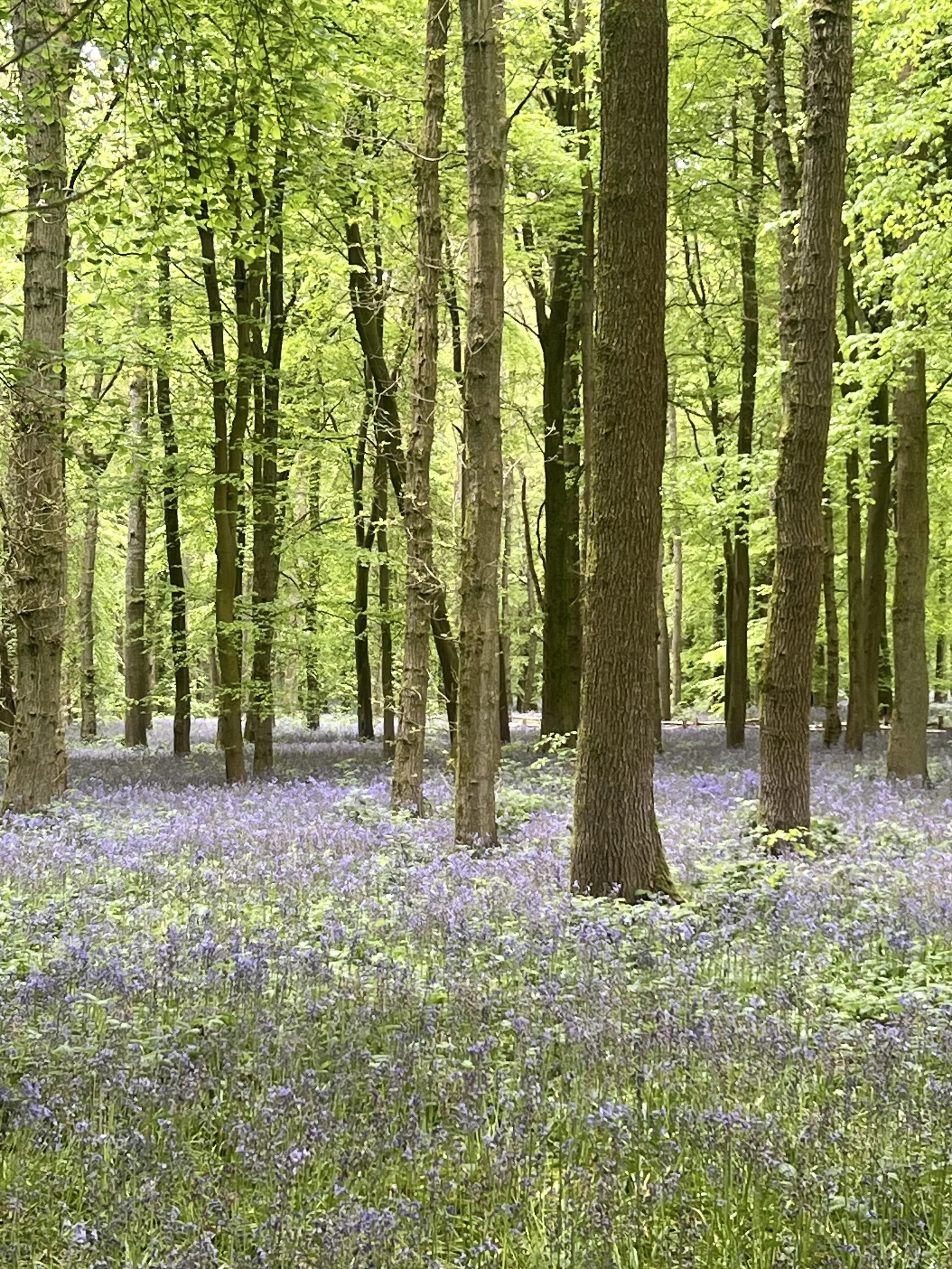
Yesterday I spent a day in nature with friends. At times we walked side by side, talking about life and work with lots of laughter. At other moments, I found myself alone, noticing the rhythm of my own steps, the quiet around me, and the space that opened up in my thinking.
Whenever I go into nature, I take a question with me. Not one I am trying to solve, but one I am willing to sit with.
When doing takes over
In my work with women leaders in the NHS, I often meet people who are deeply committed, capable, and working incredibly hard. They are constantly doing — responding to demands, solving problems, supporting their teams, keeping everything moving. From the outside, they look effective. From the inside, it can feel very different.
There is often a quiet, persistent questioning that emerges over time. What is all this effort for? Why doesn’t it feel more fulfilling? Am I really making a difference?
My current women clients are all questioning how they can be valued and recognised for the work they do, and end up doing more and feeling guilty if they cannot fit it in.
In response, what many leaders do is works harder. Push themselves more and try to compensate for their uncertainty through action. But the harder they work, the more tired they become, and the less connected they feel to their team and work, to their purpose, and to themselves.
This is something we understand in psychosynthesis as an imbalance between two dimensions of growth: doing and being.
Doing is essential. It is how things get done, how services are delivered, how change happens. But when doing dominates, without enough attention to being, something important is lost. Being is about presence. It is the capacity to be fully in the moment, to notice what is happening within and around us, and to respond rather than react. It is also where meaning and fulfilment reside.
Without being, doing can become mechanical. Leaders can find themselves caught in constant activity, yet feeling strangely disconnected from the very purpose that once motivated them.
What nature makes possible
This is where nature offers something powerful.
Nature does not demand anything from us. It does not require performance or productivity. It invites us, quite simply, to slow down and to notice. As the pace of the external world drops away, our internal world begins to shift. Thoughts that were racing start to settle. Space opens up. And in that space, something else becomes possible.
Clarity doesn’t come from forcing an answer. It emerges from a different quality of attention.
For leaders, this shift matters. When we reconnect with being, we begin to lead differently. We are less driven by anxiety and more guided by awareness. We listen more deeply. We create space for others, rather than trying to carry everything ourselves. And perhaps most importantly, we reconnect with a sense of why our work matters.
Time in nature is not a luxury. It is a way of restoring balance between doing and being. It is a way of returning to ourselves, so that what we do comes from a place that is more grounded, more intentional, and ultimately more impactful.
As I walked yesterday, I didn’t arrive at a neat answer to my question. But I did notice a shift in how I was holding it. It felt lighter, less urgent, and somehow clearer.
And that, for me, is often enough.
I often have conversations with leaders who recognise this feeling — of doing more and more, yet feeling less connected to themselves and their impact. Creating space to reconnect with being is not always easy, but it is possible, and it changes how leadership feels as well as how it works.